

INDEPENDENT & TRIPARTITE
HIGH LEVEL GROUP ON
FOREST & BIOMATERIAL

A competitive European bioeconomy is fundamentally dependent on secure, long-term and predictable access to sustainably produced biomass, which to a large extent depends on forests (in addition to agriculture). These natural resources constitute Europe’s most important domestic source of renewable raw materials and are essential for industrial decarbonization, strategic autonomy and economic resilience.
The availability of biomass and the full potential of the bioeconomy need policies that ensure a balanced approach in which sustainable forest management, active use of biological resources and industrial development are jointly enabled, taking into account competition on the global market. Regulatory frameworks that undermine secure access to biomass, limit investment incentives, reduce the capacity to mobilize renewable raw materials, as well as overlook mapping and assessing potential climate, ecological and supply risks, should therefore be systematically reviewed and adjusted to support Europe’s long-term climate, competitiveness and security objectives.
A holistic approach to the bioeconomy and a shift from a conservation-only perspective to a more strategic and economic vision of forests is needed in all countries. This should include the promotion of horizontal, cross – sectoral value chains, linking energy, construction, chemicals, amongst others, to pave the way for a new wave of competitive European industries based on advanced biomaterials and bioproducts. Sufficient supply of wood for biomaterials in many sectors of the economy requires plantations and comprehensive land use, soil and water policies adjusted to regional diversity, not just to address carbon sequestration but to achieve a circular bioeconomy. This will enhance Europe’s autonomy and resilience and its transition to a climate neutral economy.
Given the much higher environmental footprint of cities compared to rural areas, it is imperative that they be included in a renewed forest strategy, as well as agroforestry. Urban green must be seen as part of the value chain of renewable materials (fibre) and energy. This will contribute to solving competition for land use and help achieve the overall goals.
This HLG is chaired by Esko Aho, former Prime Minister of Finland.
UPCOMING EVENTS
Timeline of the most recent and upcoming HLG Neighbourhood Interdependency.
16 Jan 2025
A European bioeconomy to strenghten EU competitiveness
29 Apr 2025
Rethinking the EUDR: Addressing the unintended spillovers of EU environmental regulations
Ensuring coherence in the EU’s Bioeconomy Strategy and the strategic role of wood
12 Nov 2025
09 Mar 2026
EU Bioeconomy Vision for 2040
20 May 2026
Bioeconomy development and the complex issue of supply
PAST REPORTS


Ensuring coherence in the EU's bioeconomy strategy and the strategic role of wood
Rethinking the EUDR: Addressing the unintended spillovers of EU environmental regulations
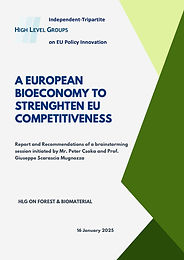
A European bioeconomy to strengthen EU competitiveness
The following people, from the European and national public sector, from corporations and from academia, gave their time and expertise to the work on forestry & biomaterials:
Download: HLG Forest & Biomaterial Members List